Grandparents 6 min read
How to connect babies and toddlers with grandparents far away
Give grandparents a place in ordinary family life without asking a young child to perform or stay on a call.
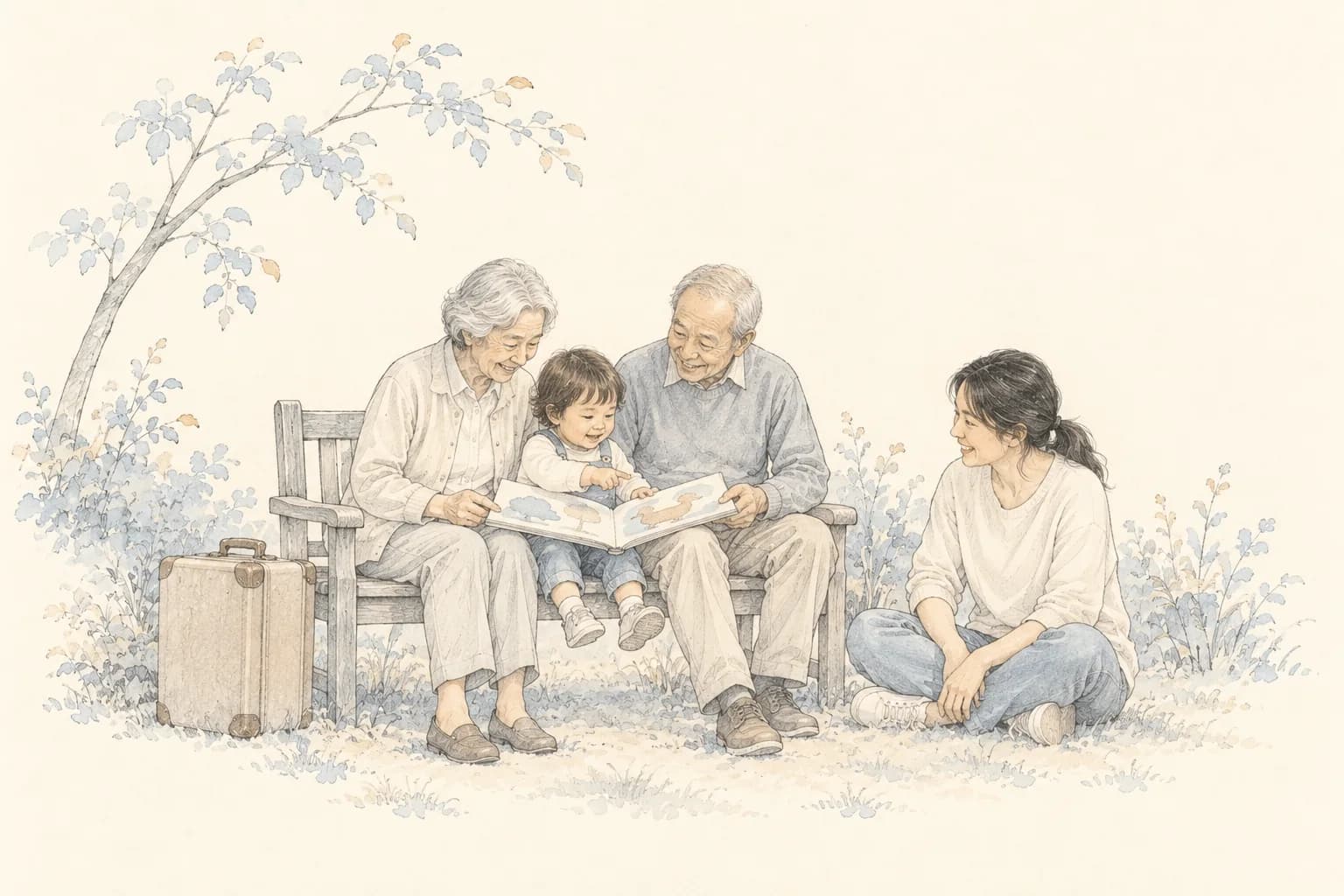
To connect a baby or toddler with grandparents far away, try small exchanges that fit the child's attention and your household's routine: a live hello, familiar song or family photo. Let the child move or finish, and let the relationship develop without a deadline.
This can include biological, adoptive, step or chosen grandparents. Use the names that fit your household. The aim is welcome connection with a trusted adult, without a tally of calls or a test of recognition.
On this page
1. Let the child's caregivers set the arrangement
The parents responsible for the child's care should agree on timing, technology and privacy. If care is shared, make those choices together. A grandparent can offer availability without claiming every free window.
Consider accessibility: a familiar phone, good lighting, captions when available or someone helping the grandparent. You do not need a new app. If live video is awkward, choose another format.
2. Keep a live call responsive to the child
ZERO TO THREE's review of family video calls emphasises responsive exchanges and an adult nearby to support young children. Sit with the child, respond to what they notice and help the grandparent follow their attention. A live exchange differs from watching a recording.
Try showing a toy or copying a wave. If the child turns away, adults can talk or finish. You do not need to bring the child back repeatedly, request a skill demonstration or apologise.
She's looking at her toy now. Could you show her something similar at your end? If she's finished, let's let her go and you and I can have a quick catch-up.
Further reading: ZERO TO THREE: Virtual family time
3. Give the grandparent one familiar thing to share
Pick an activity everyone enjoys: a greeting, song, glimpse of a pet or a few pages of a familiar book. A grandparent could keep the same book, with the parent helping the child follow along.
Some days you may only manage hello. Ask the grandparent to notice what the child is doing and leave pauses. Enjoying the exchange matters more than completing the song or getting a reply.
- Show one familiar object and let the child decide whether to look.
- Sing a short family song together, if the child is interested.
- Let a toddler choose a book or toy to bring over, then follow their choice.
4. Include family stories between calls
Look at a printed photo together and use the grandparent's familiar name. Tell an ordinary story: what they cook, their garden or a place you visited together. A grandparent can send a greeting for the parent to share when it fits.
Use languages natural to your family. A song in a grandparent's language can be a shared activity without a lesson or demand to repeat words. The adult nearby can join in and decide when to stop.
5. Try a flexible window with an easy exit
Choose a window around your household's routine. Check both local times for the actual date across time zones. The child may still be asleep, occupied or uninterested when it arrives.
You could try a brief Saturday hello every other week for a month, with an adult update if the child is unavailable. This is an adaptable trial, not an expert schedule. Do not keep a tired child awake, delay care or wake someone for a call.
Let's try Saturday morning our time for a brief hello. If he's asleep or not interested, we'll leave him be and I can tell you about our week. We can change the plan after a couple of tries.
6. Let in-person affection be the child's choice
Before a visit, explain what the child enjoys. Read a familiar book together, roll a ball with a willing toddler or sit beside their play while a caregiver stays nearby. Give the child room to observe rather than expecting an immediate cuddle after a long journey.
Raising Children Network advises respecting young children's choices about kisses, cuddles and sitting on laps. Offer an optional wave or hello instead. Gifts and travel do not create an obligation for affection or time alone with the child.
We're letting her choose hugs. She may want to wave or sit with us at first. You could start with the book she likes, and we'll give her time to join in.
Further reading: Raising Children Network: Talking about consent with children and teenagers
7. Keep photographs and care decisions clear
Agree on recording calls and forwarding or posting photos. Share only what parents are comfortable making available. A relationship does not require public pictures, a child's location or detailed routine updates.
Connection and childcare are separate decisions. If grandparents will help with care, discuss routines and permissions directly. If a relationship is unsafe or repeatedly ignores the child's boundaries, parents can change, supervise or pause contact.
8. Keep what was enjoyable and change the rest
Ask the adults what was easy and notice what the child willingly joined. Keep helpful parts, shorten calls or change the timing. Grandparents can stay close to the parent through their own conversation; every exchange need not involve the child.
If you want help remembering your own contact plan, Relationshipss keeps a manual list and intervals you choose. Record an actual conversation when it happens and use the list to plan another. It does not track the child, call grandparents, send messages or provide automatic push reminders.
Common questions
How long should a video call with a baby or toddler last?
Use the child's interest and the caregiver's capacity rather than a fixed target. A brief hello can be enough. Stay alongside the child, make the exchange responsive and let it end when the child looks away, becomes uncomfortable or needs care.
What if my toddler does not want to speak to their grandparents?
Do not turn the call into a performance or keep asking for a greeting. Let your child play, offer a familiar activity once, and let the adults talk or finish. Try another time if you want to. An uninterested call does not decide the future relationship.
How can grandparents connect when video calls do not work?
Try printed family photos, stories told by the parent, a familiar song or an occasional visit that fits the household. Grandparents can also talk with the parent about ordinary family life. Choose formats the caregivers welcome and let the child join without pressure.
Keep a little list of the people you miss.
Relationshipss shows who you’ve gone quiet on when you open it. Choose a person, get in touch your way, then mark that you talked. You can start in your browser without an account.
Try with three peopleSources and further reading
- ZERO TO THREE: Virtual family timeSupports responsive exchanges and adult support during young children's video calls. It does not establish an ideal call length or frequency.
- Raising Children Network: Talking about consent with children and teenagersSupports respecting young children's choices about physical affection, including with relatives.